
I had my youngest almost 18 years ago, and I still get up in the middle of the night to go to the
bathroom. You better believe that I am always looking for the nearest restroom when I am out
and about!
Like so many women, I just decided this was how it was going to be from now on and decided to
live with it. Full disclaimer: that is not how you should live your life, and I do not advocate
for it at all. For the longest time, I assumed my pelvic floor was simply weak. But after a recent
consultation and assessment, I realized I was actually holding a ton of tension in my pelvic
muscles. Mind blown!
Here is what I’ve learned about pelvic health, why tension is the sneaky culprit, and how
combining pelvic floor physical therapy with therapeutic massage can finally bring relief.
The Sneaky Culprit: Pelvic Floor Tension
Turns out, pelvic health can be affected by childbirth, but it can also be impacted by long
workdays, stressful conversations, tough workouts, and even while we sleep (nothing is safe!).
Over time, our bodies adapt to stress by holding onto tension. Our shoulders creep upward, our
jaws clench, and our pelvic floor muscles tighten.
Tension isn’t just something that lives in your shoulders or back; it is often part of a larger,
whole-body pattern. The body works as an interconnected system, not in isolated parts. How you
breathe, move, and stabilize all influence where tension shows up.
At the center of that system is your core, which includes your:
● Diaphragm
● Abdominals
● Pelvic floor
When this system isn’t well coordinated—often due to stress, constant bracing, or shallow
breathing—that tension has to go somewhere. Often, it settles right in the pelvic floor. This
tension can contribute to persistent hip or back tightness, a constant feeling of bracing, or
difficulty fully relaxing, even when you are trying to rest.
My Experience with Pelvic Floor Physical Therapy in
Woodbury, MN
Let me walk you through my assessment at Awake Pelvic Health & Wellness in Woodbury, MN, with Dr. Katie.
She started by allowing me the time and space to share the symptoms I had been experiencing.
Some of these details felt private and embarrassing, but she made it feel like the most natural
thing in the world to share. To really understand what I had been going through, she gently asked
questions and gathered information, all while making me feel completely supported. It felt like
everything was going to be alright.
Next, she educated me on how the pelvic floor functions and what it actually looks like. It’s
made up of a “sling” of muscles, which completely fascinated me! She then did an external
exam, gently palpating the muscles of my pelvic floor to determine exactly where I was holding
tension. This was all done while lying on a warm, soft table in a cozy, quiet room. Dr. Katie
made sure I was comfortable throughout the entire process, helping me learn more about my
body and why it functions the way it does.
Note: If you are not comfortable with an internal or external pelvic floor exam, you
can absolutely communicate that and choose an option that works best for you!
Reconnecting with Your Body: A Simple Breathing Exercise
Throughout the consultation, I learned that pelvic floor physical therapy helps address the root
cause of these issues. It looks at how your body coordinates breath, movement, and muscle
activity, helping you build new patterns that allow for both support and true relaxation.
Let’s try reconnecting with this system right now through your breath:
- Get comfortable: Lie on your back or sit comfortably.
- Position your hands: Place one hand on your chest and one on your lower ribs or
abdomen. - Inhale: Breathe in slowly through your nose, letting your ribcage expand in all
directions. As you inhale, think about gently softening your belly and pelvic floor. - Exhale: Breathe out slowly through your mouth, allowing everything to fall back down
and relax without forcing or bracing.
Try this for one to two minutes. The goal is not to do it perfectly, but to start noticing where you
might be holding tension. How did that feel? What sensations did you notice? When we take
time for practices like these, we can finally start to connect with our bodies and become aware of
things we otherwise might miss.
Integrating Care: How Massage Therapy Helps
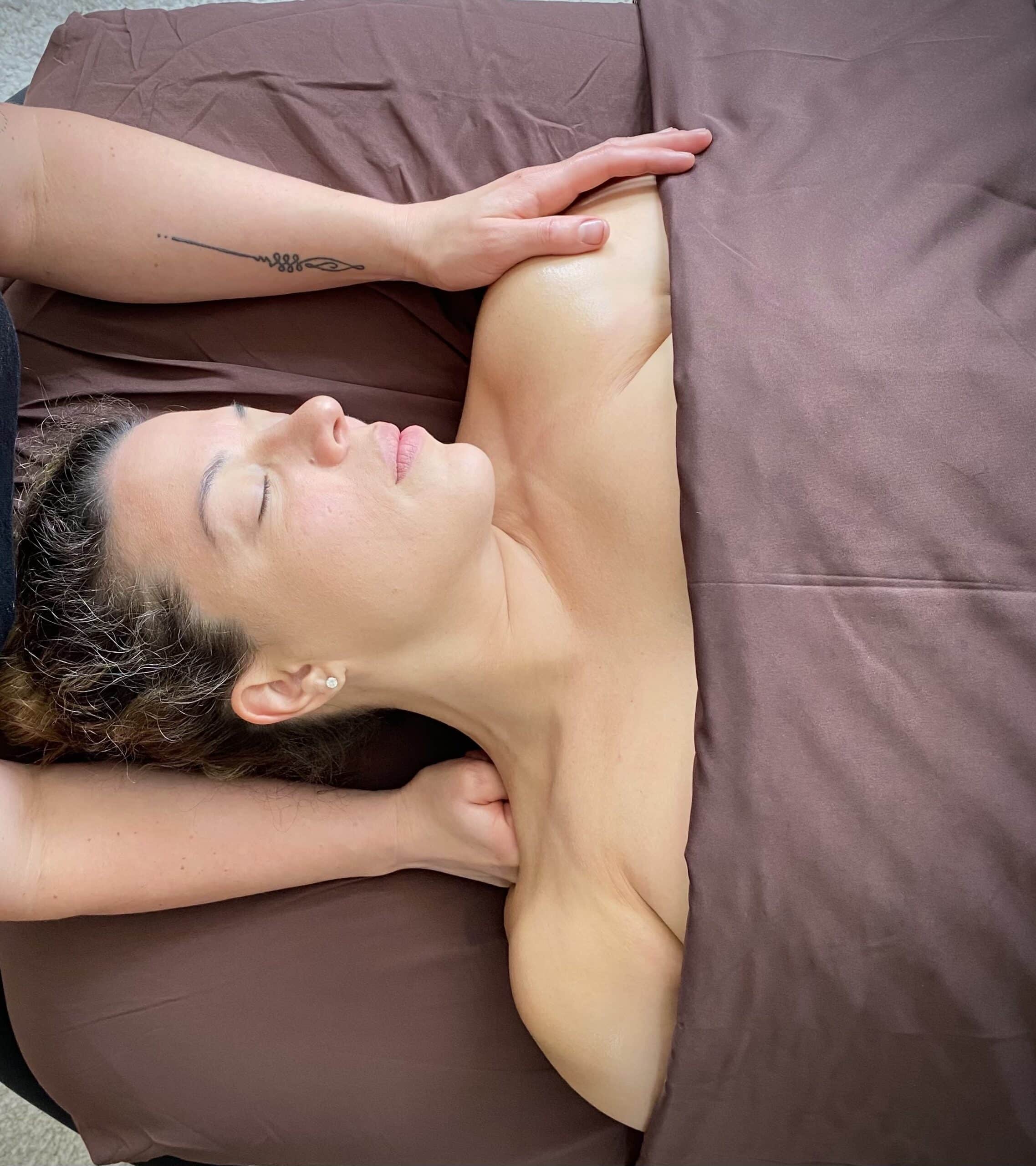
Massage therapy is a powerful partner to pelvic floor physical therapy. Massage helps calm the
nervous system, reduces muscle tension, and reinforces the feeling of relaxation that we so
desperately need in today’s fast-paced, always-on world. For those looking for a stress relief
massage in the Twin Cities, this integrated approach supports the new patterns your body is
learning through physical therapy, helping those positive changes actually stick.
This type of integrated, whole-body care is exactly what we value at Decompress Massage
Therapy in Minneapolis. We love working alongside local practitioners like Awake Pelvic Health & Wellness, who share a similar focus on helping the body unwind and restore balance through hands-on work.
Because lasting change does not come from releasing tension alone, it comes from combining
that relief with the tools and support your body needs to maintain it.
Ready to Finally Release That Tension?
If you are realizing that your lingering aches, pains, or pelvic floor issues might be rooted in
tension, you do not have to just “live with it.”
● Step 1: Schedule an assessment at Awake Pelvic Health & Wellness
https://www.awakepelvichealth.com/contactus to get to the root of your pelvic floor
function.
● Step 2: Support your body’s healing process by booking a massage session at Decompress Massage Therapy in Minneapolis. Let’s calm your nervous system and help your body remember how to truly
relax.
Have you ever noticed yourself holding tension in unexpected places? Leave a comment below or
send us an email—we would love to hear your experience!
About the Author: Hannah is a massage therapist and the founder of Decompress Massage
Therapy in Minneapolis, MN. Dedicated to reducing stress in both your body and mind, Decompress specializes in helping clients release chronic tension, calm their nervous systems, and restore balance to their busy lives.